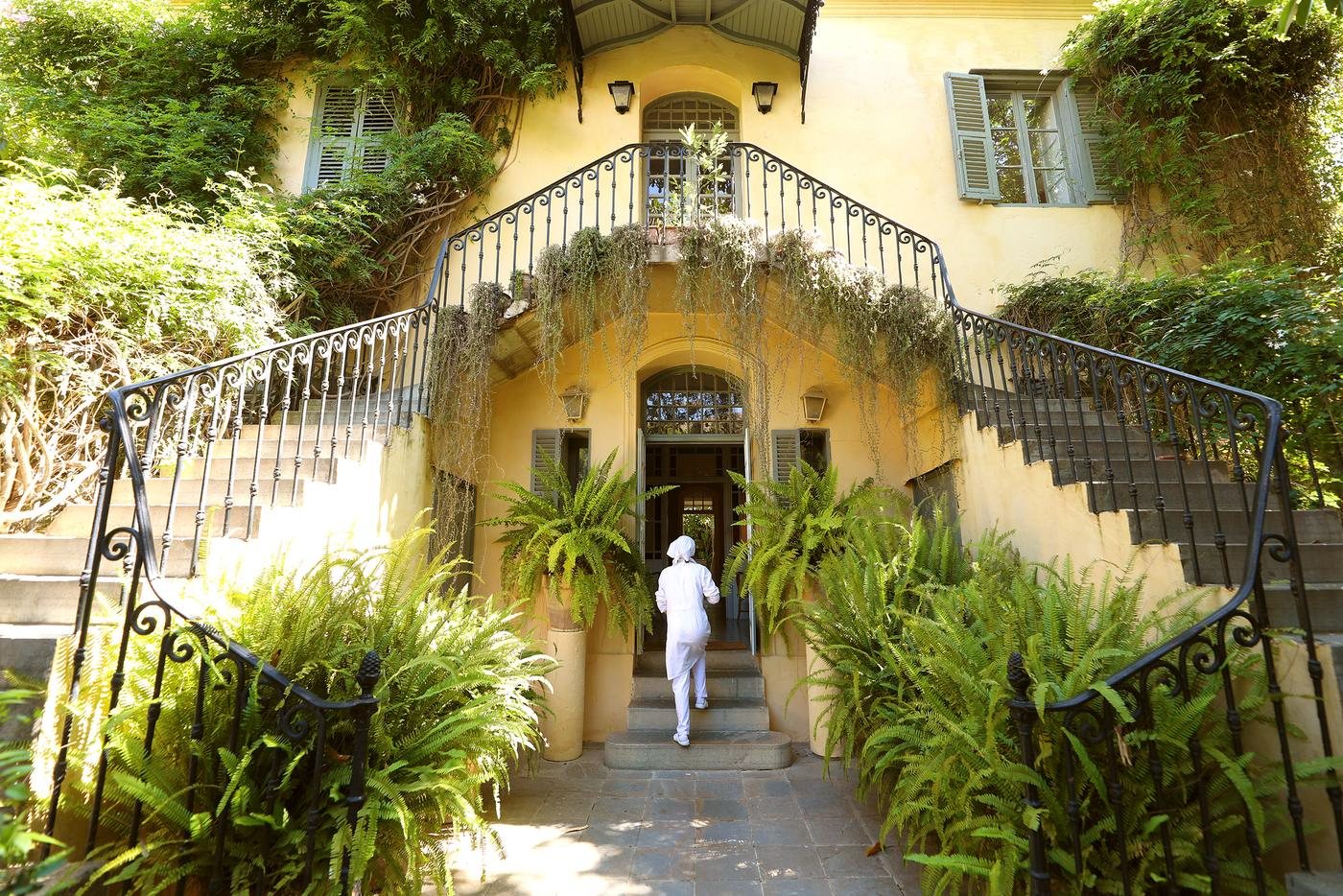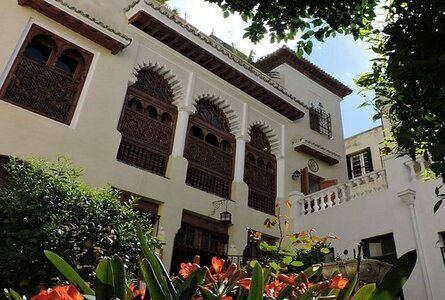
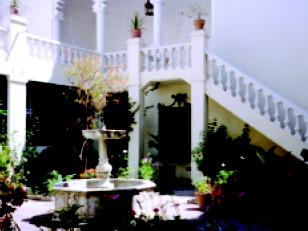
A cultural institution is more than the objects it holds. It is also a decision to keep a door open: to research, to discussion, to people arriving with different questions. The courtyard in this archival photograph belongs to the American Legation in Tangier. Its scale invites a particular kind of attention. Rather than using the building as a decorative emblem of the city’s past, it is worth asking what a historic place can make possible in the present.
The Legation’s own account dates the gift of the property from the Sultan of Morocco to the United States to 1821. Today it describes itself as a museum, research library and cultural centre. It is also the only United States National Historic Landmark outside the United States. These are substantial facts, but they do not tell us everything about what a visitor will find on a particular day. Programmes and practical arrangements still belong to the institution’s current notices, linked below.
That combination of historical significance and continuing use is what interests us. A building can preserve a diplomatic story while also making room for cultural exchange. The two functions need not compete. Indeed, the most valuable encounter with a historic place may be the moment when its official narrative meets a reader’s less predictable question. What has been kept? What has been left out? Who can use the material, and what new account might they make from it?
Another Tangier institution offers a different route into those questions. In a 2019 exhibition text, Pace Gallery describes Yto Barrada’s return to Tangier in 2004 and the nonprofit project she launched with fellow artists to save Cinema Rif. The account places the cinema on the Grand Socco and describes screening rooms, an archive, a library and a café. It is a historical source for an artist-led initiative, not confirmation of present staffing, leadership or access to every facility.
The distinction between historical account and current programme is important. Barrada’s example suggests that an artist’s work can include creating conditions in which other people encounter images. The cinema becomes not simply a venue for finished films, but part of the cultural infrastructure of a city. That is an editorial interpretation of the documented project, not a quotation from its founders or a report of a conversation with them.
The Legation and the Cinémathèque should not be made interchangeable. Their histories, purposes and audiences differ. Together, though, they offer a useful opening for this edition: culture is not only something to admire, but something sustained through spaces, care and repeated use. Follow the source links for the institutions’ own words, and the What’s On guide for the dated notices we have checked. The invitation is to look past the picturesque doorway and consider the work of keeping it open.
← Back to the Tangier edition