There is a temptation, when writing about Tangier, to begin with somebody else’s bookshelf. A city becomes a procession of celebrated visitors, their addresses, their appetites, their departures. The stories can be compelling. But when a place is introduced chiefly through the people who passed through it, the people who stayed risk becoming scenery. This edition begins with a different question: who is allowed to describe the city in the present tense?
Our answer is an editorial conviction, not a claim to have already gathered every voice. Contemporary Moroccan writers, artists, workers and readers should shape the conversation. Not as witnesses summoned to decorate an outsider’s argument, but as people whose interests determine what deserves attention. A magazine can listen without pretending that listening is complete. It can also recognise that an elegant sentence is no substitute for asking somebody what they mean.
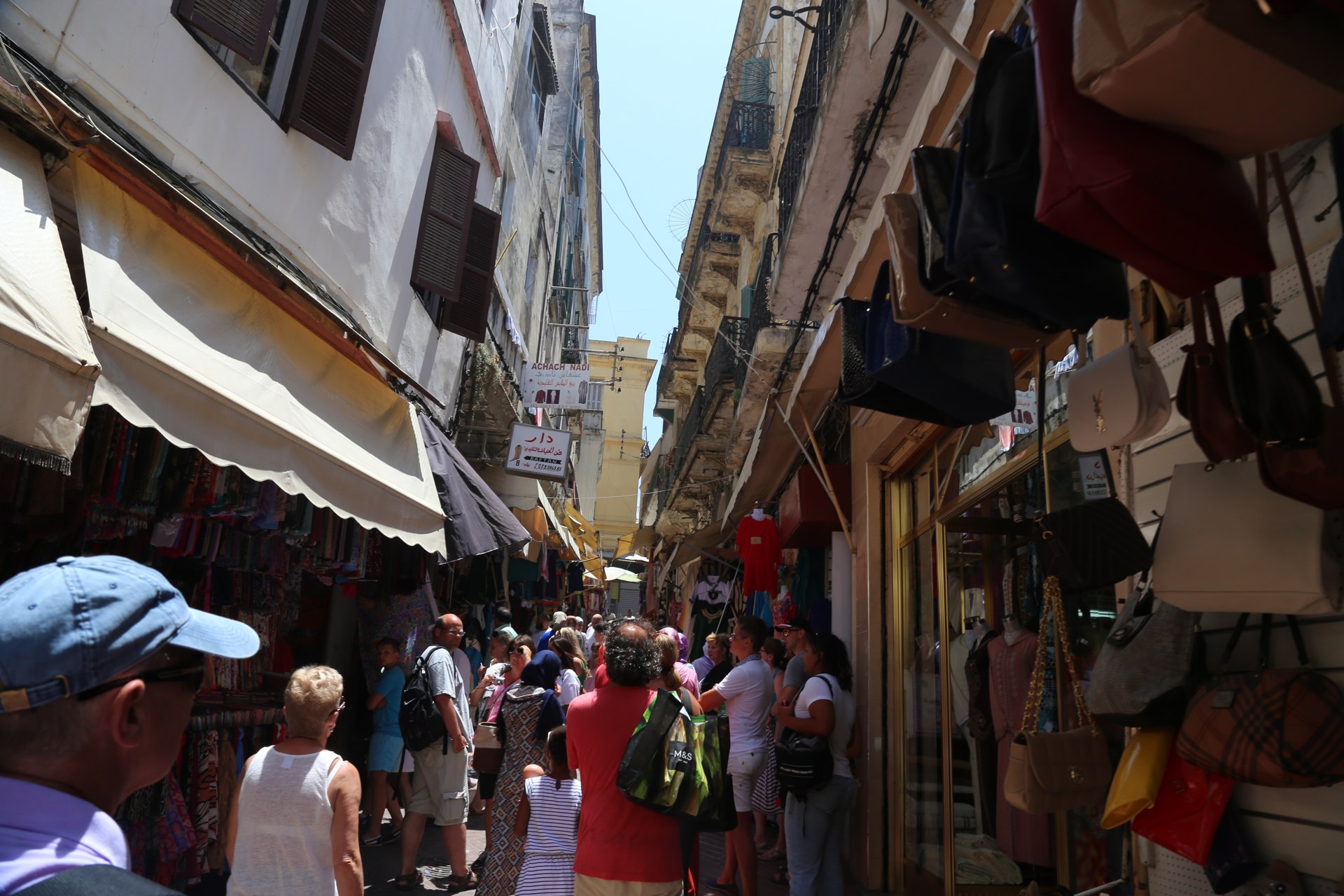
The photograph accompanying this essay shows a street in Tangier’s medina. It is not evidence of an interview, and we know nothing about the people pictured beyond what the image records. That distinction matters. Streets invite projection: a passer-by becomes a character, a doorway becomes a secret, a market becomes a metaphor. The more seductive the description, the more carefully we should ask what it actually knows.
There are useful counterweights to the habit of looking backwards. The artist-led story of the Cinémathèque de Tanger, documented in Pace Gallery’s historical account of Yto Barrada’s work, points towards culture being made through institutions as well as individual artworks. Saving a cinema is also an argument about who gets to assemble, watch and remember. The current programme, rather than a list of famous former visitors, offers one starting point for following that argument into everyday life.
The six doors of this magazine are deliberately connected. Food is not separate from work; a café is not separate from ideas; the evening is not separate from culture. We want to follow people into the things they make and the spaces they share. This is the locally grounded approach we admire in Bisous Limoux: a place approached through its makers, rather than reduced to a collection of attractions. Tangier requires its own questions and its own language.
No first edition can settle who tells a city’s story. What it can do is establish a practice: distinguish observation from assumption, give sources their place, and leave the conversation open to correction. The invitation here is not to discover a city that was waiting for us. It is to pay attention to a city already speaking, and to resist making our own voice the loudest thing on the page.
← Back to the Tangier edition