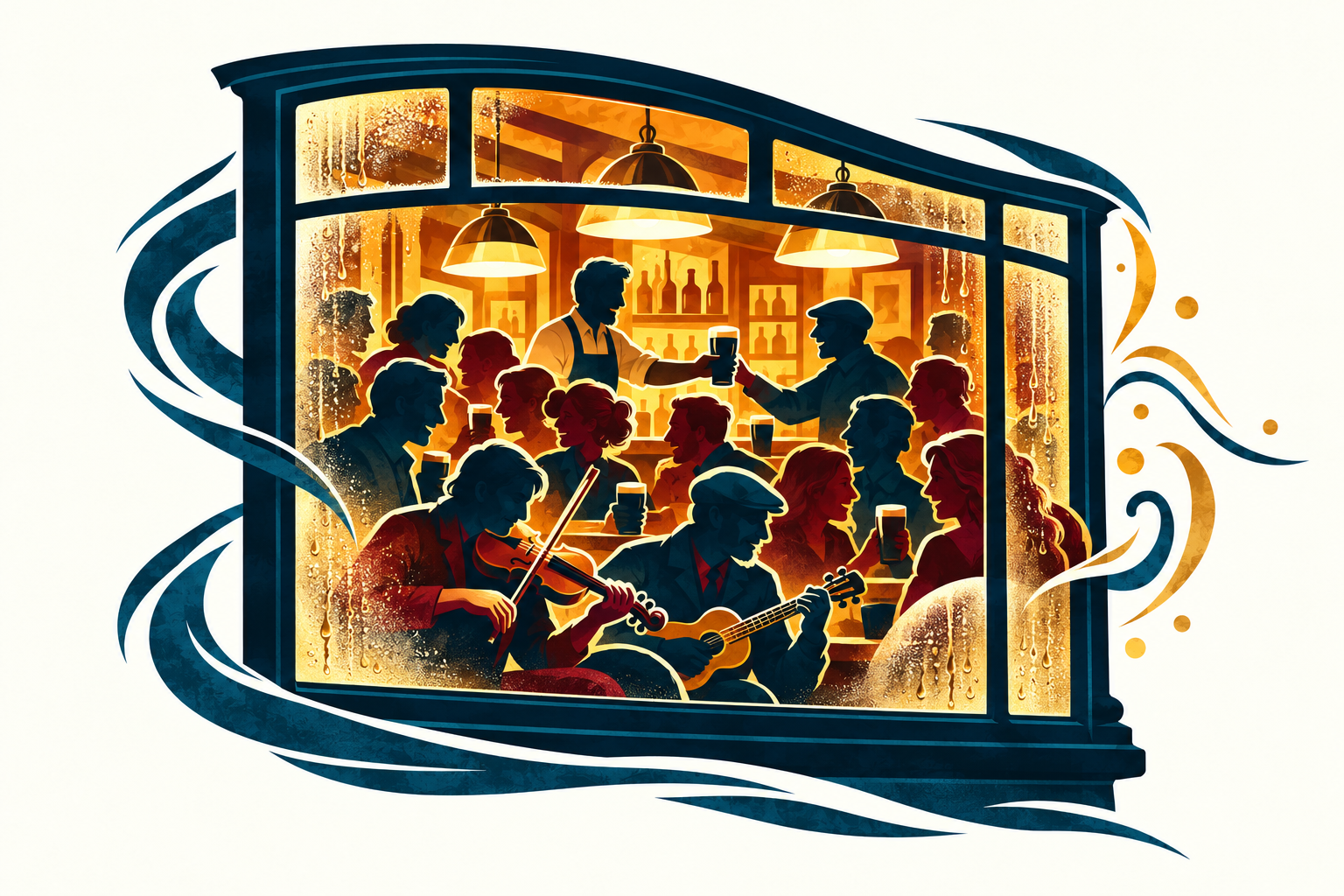
Picture a Dublin street after dark. The wind has found its way into your coat. Behind a pub window, lamps cast pools of yellow and ochre across the glass, its edges misted by the heat inside. A door opens. A ripple of fiddle, a roar of laughter: out comes a gathering storm of warmth, a hurricane of steamy energy, the sound of people imbibing and communing. Voices overlap, someone beginning a story before the last one has quite finished. For a moment, the pavement is part of the room.
That is the invitation: come in. Get stuck in. There is an evening happening, and you could be part of it.
It is an appealing image, but the life behind it deserves more than a postcard explanation. Dublin’s capacity for company has a history: songs carried from place to place; stories learned by listening; musicians who made room for one another; publicans who gave them somewhere to play. The pleasure is real. So is the work that keeps it possible.
The story before the song
Long before a microphone could make a person the loudest presence in a room, a good storyteller could command it. Ireland’s oral traditions held family histories, local knowledge, wonder tales, gossip and accounts of ordinary life. The seanchaí was a keeper of memory as well as a teller of stories. Contemporary practitioners continue to adapt that inheritance: Dublin-based storyteller Jack Lynch, for example, works with memory and with folktales carried by refugees. The tradition’s reach extends well beyond a fireside in an imagined rural past.1
Folklore also belongs to the city. Between October 1979 and December 1980, UCD’s Urban Folklore Project recorded more than 700 interviews with Dublin men and women. Those voices became 75 manuscript volumes, alongside the original recordings: evidence that a city’s history lives in what people remember saying, doing and hearing, as well as in the buildings they leave behind.2
A story gives an otherwise unremarkable incident a second life. A missed train, an appalling employer, a neighbour with an inflated opinion of himself: in the telling, somebody finds the detail that makes the room laugh. That requires judgement. When to pause. What to leave out. How long an audience will let you get away with it. The listener helps make the performance.
The city that sang its news
Dublin’s streets had their own performers. Michael Moran, better known as Zozimus, was a nineteenth-century street singer and ballad hawker who gathered an audience around his voice. Cheap printed ballad sheets helped songs travel. The Irish Traditional Music Archive traces Ireland’s earliest known printed ballad sheet to 1626; the trade reached its height in the nineteenth century, with some hawkers still selling songs into the 1960s.3
Consider what a song could carry: a scandal, a grievance, a love affair, a departure, a joke at somebody powerful’s expense. It could be repeated by a listener who owned neither the street nor the newspaper. A memorable tune gave the words another route through the world.
The archive’s Góilín collection makes that breadth wonderfully tangible. Alongside songs about work, emigration and politics sit songs of humour, social life and drinking. The original online project presented roughly 700 recordings made at the Dublin singing gathering from the early 1980s into the 2010s.4 Here is a city’s emotional range: people leaving, people longing, people working, people behaving disgracefully, and people enjoying the opportunity to tell everyone about it.
Frank Harte, the singer and collector raised in Chapelizod, helped keep that repertoire circulating. An architect by profession, he collected songs and passed them generously to other singers. His legacy suggests a useful measure of preservation: a song has a future when somebody else wants to sing it.5
A laugh, a rhyme, a little mischief
The limerick belongs in this company of pleasures: five lines, a bouncing rhythm, an AABBA rhyme, and a final turn that can be ridiculous, rude or both. Edward Lear helped popularise the form. That does not establish it as a Dublin invention; it is better understood here as a companion to the city’s appetite for verbal play.6
Its appeal is easy to hear. The rhyme sets up an expectation. The teller brings everyone towards it, then delivers the surprise. A good comic story can work in much the same way. For a few seconds, the whole room is waiting together.
Wonder tales offer a different kind of freedom. Fairies, impossible bargains and encounters with the Otherworld can make familiar fears strange enough to examine. Storytellers interviewed by Smithsonian Folklife describe a living practice in which inherited tales change with their tellers and audiences.1 Humour and fable give a person room to say something indirectly, to entertain and unsettle in the same breath.
The road into Dublin
It would be comforting to imagine the session has always occupied every Dublin corner. The evidence is more interesting. Fiddler John Kelly came from West Clare in 1945 and established himself on Capel Street. His recorded recollections describe a Dublin where traditional musicians could be mocked, where players gathered in homes as well as pubs, and where emigration could leave a musical circle painfully diminished.7
His memories also acknowledge the extraordinary Traveller piper Johnny Doran. A history of this music needs to recognise the individual musicians, including Traveller musicians, whose artistry helped carry it forward. Their contribution cannot be reduced to colourful scenery around somebody else’s evening.
Kelly remembered nights sustained by playing, talk and repeated cups of tea. That detail matters. The essential ingredient was people finding one another. Alcohol was one part of some gatherings; the appetite for music could keep a night going on its own.7
The archive records a long history of music in public houses, particularly around fairs and communal occasions, followed by an expansion from the 1960s.8 What now feels inevitable was shaped by movement, opportunity and deliberate hospitality.
Where the room becomes an instrument
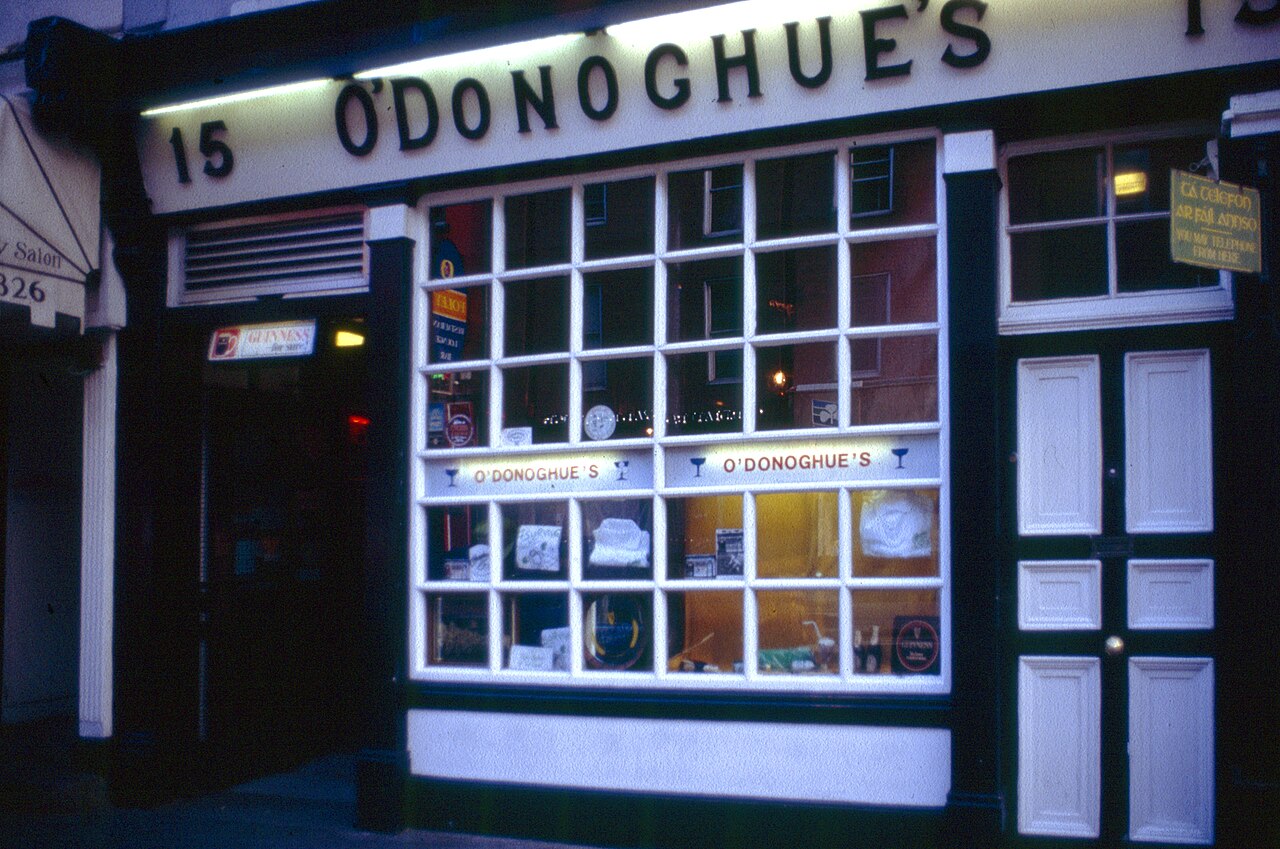
At O’Donoghue’s on Merrion Row, the connection with The Dubliners places the pub within the folk revival of the 1960s. Its own history describes that gathering of musicians and its continuing programme of traditional music seven nights a week.9 It is a place to follow a musical lineage into a room still in use.
Song and literature meet particularly clearly in On Raglan Road. Patrick Kavanagh’s poem became inseparable from Luke Kelly’s singing. An account preserved by Dublin City Libraries recalls Kavanagh offering the song to Kelly at the Bailey pub in 1964.10 A poem, a conversation and a singer’s interpretation: the distance between page and public life can be very short.
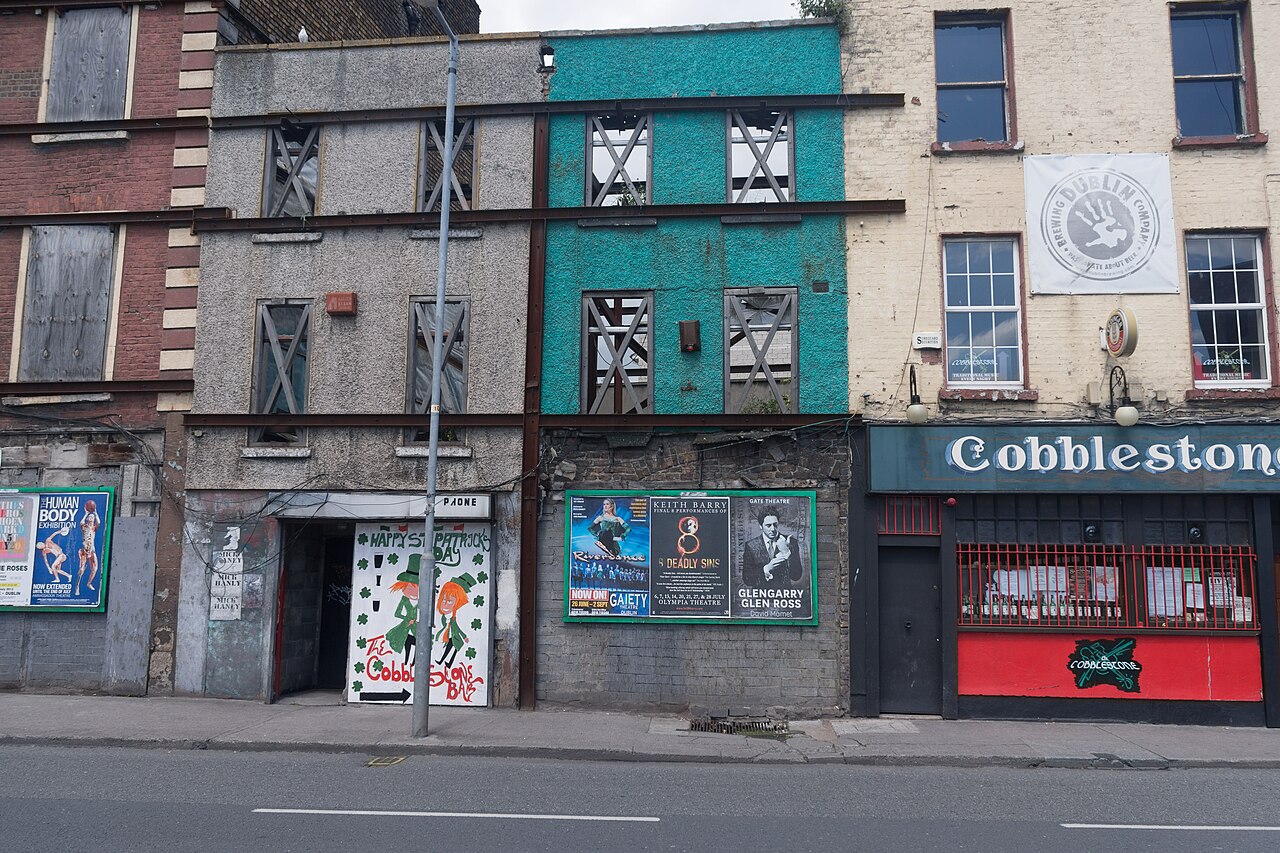
Across the river, the Cobblestone on North King Street in Smithfield puts music at the centre of its identity. Proprietor Tom Mulligan’s stated ambition follows his father’s: to leave the music in better condition than he found it. The pub advertises daily traditional sessions and accommodates both experienced players and people learning to take their place in public music-making.11
There is a useful distinction to hear. An instrumental session is built around shared tunes, often jigs, reels and hornpipes; a ballad performance gives words and narrative a different prominence. A busy room may carry conversation around the music, but volume alone tells you little about the quality of the night. Watch the musicians. Notice who begins a set, who joins, who waits.
For singing itself, look to An Góilín. Founded in 1979 by Tim Dennehy and Dónal de Barra, it describes an open gathering for singers and listeners, without a membership requirement, held most Friday nights outside the summer at the Teachers’ Club, 36 Parnell Square.12 Check the current programme before going. Here the pleasure of company includes giving a singer the room. The chatter can wait.
Why the happiness has weight
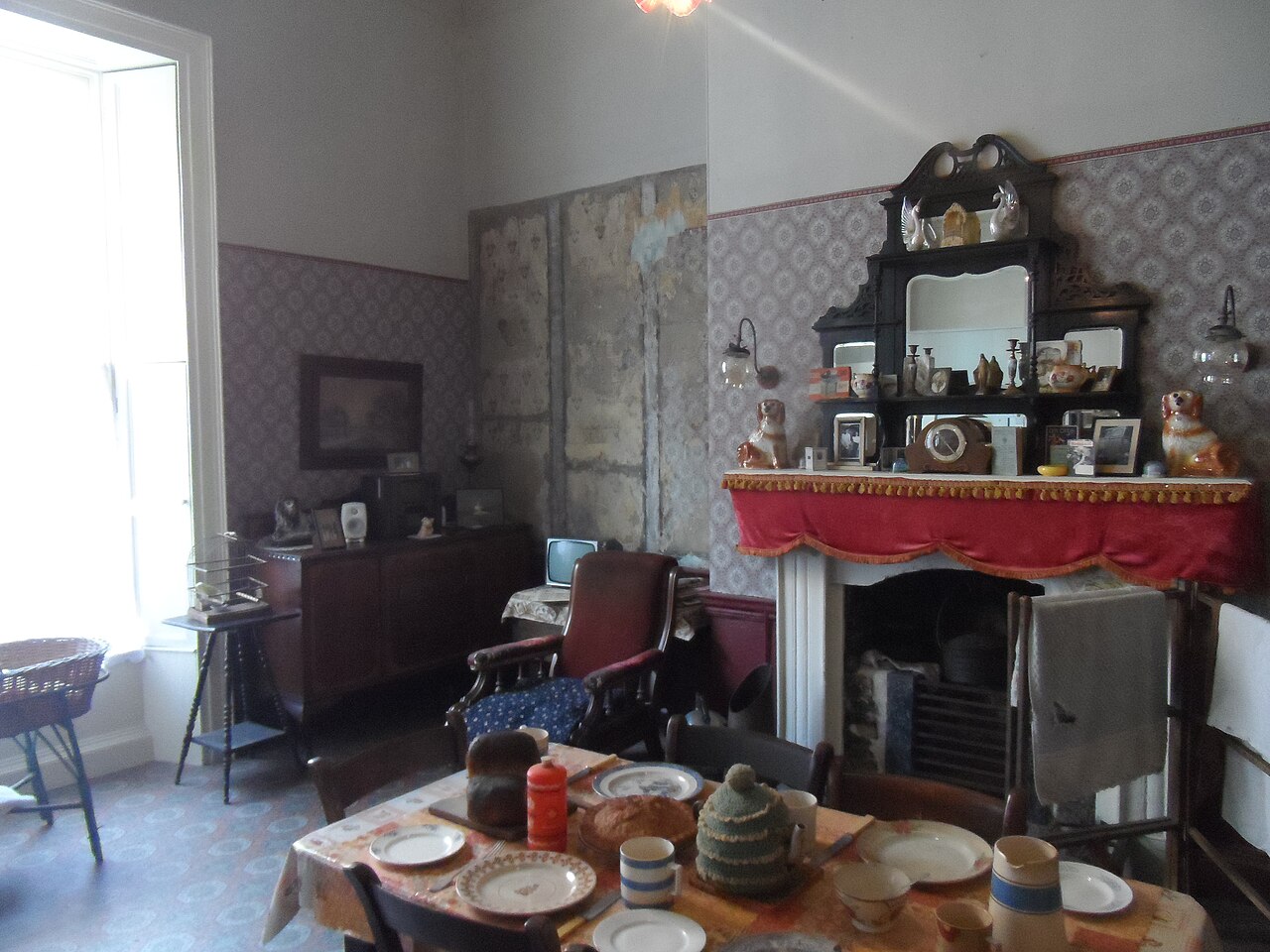
To understand the life behind these evenings, make time for 14 Henrietta Street. Its guided visits trace a house from Georgian grandeur through its tenement history. More than 100 people lived there in 1911.13 Hearing the stories of its residents gives substance to words such as hardship, neighbourhood and home.
It would be glib to credit deprivation with producing good humour. Poverty has costs; crowded housing offers no guarantee of companionship. Nor does every Dubliner share one temperament. What the songs and recollections do show is the value people placed on gathering, on making something together, and on finding pleasure within lives that also contained loss.
That gives the revelry its depth. A room can hold a lament and an outrageous story in the same evening. The change of mood is part of its range. There is space to remember somebody, then space to laugh. A person arrives with the day still clinging to them and gradually becomes absorbed in the company.
The pint belongs in that picture, passed across the bar and settled beside an elbow. It is familiar social theatre. So are the coat being moved to make room, the introduction, the invitation to stay for another tune. Those small acts make a stranger’s evening possible.
The next voice
Dublin’s younger musical life gives this inheritance new forms. Lankum’s False Lankum, released in 2023, is one place to begin listening; the group’s label describes an approach that brings alternative folk and psychedelia together.14 Their sound can be dark, immense and unsettling. An old repertoire can support far more than a cheerful chorus.
Storytelling is finding new rooms too. Seanchoíche began in Dublin and brings volunteer speakers together around themed evenings, welcoming personal anecdotes, fiction and other forms of narrative.15 Its format is contemporary, while its central proposition remains familiar: somebody stands up, other people listen, and an experience becomes shared.
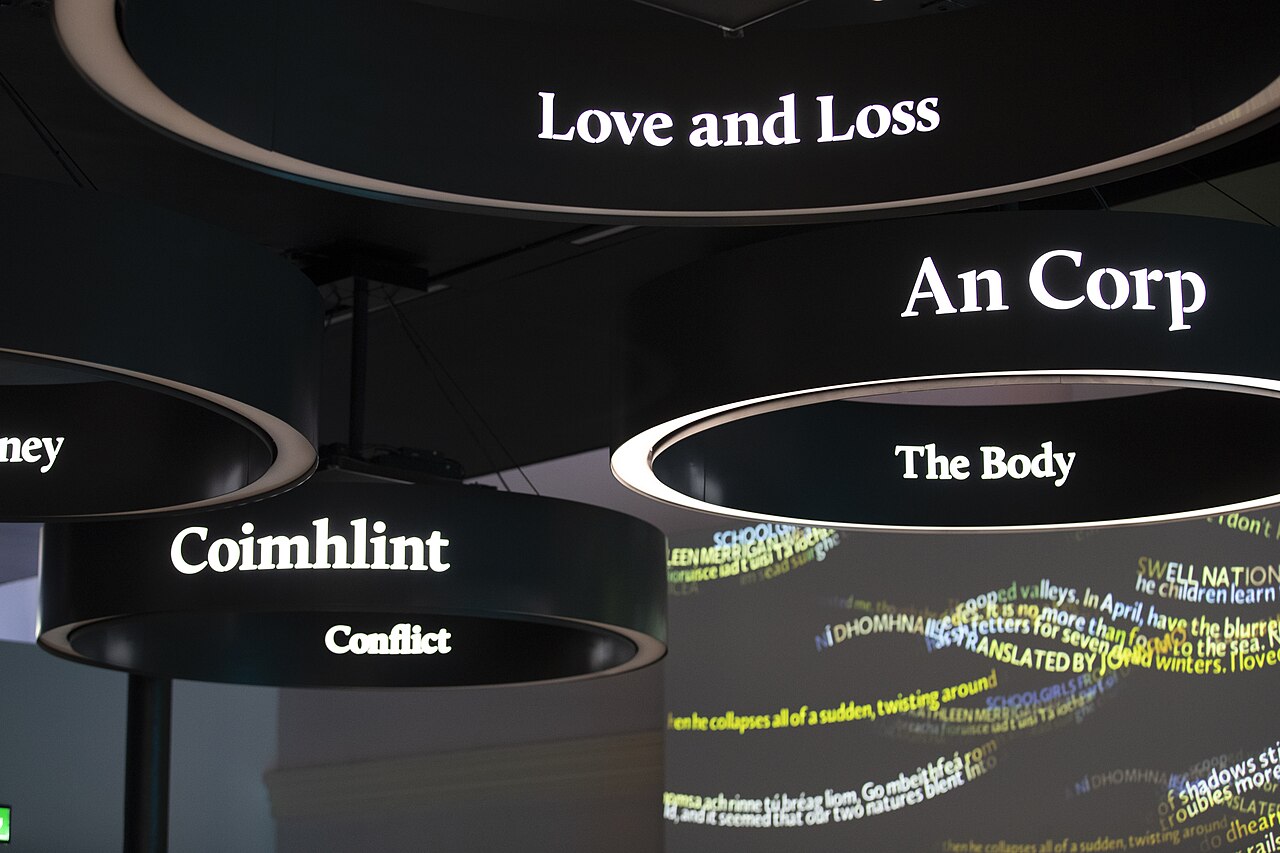
For a daytime encounter with the city’s voices, MoLI, the Museum of Literature Ireland at 86 St Stephen’s Green, approaches writing through sound, manuscripts and immersive installations. Its programme includes Riverrun of Language and A City of Words.16 It offers another way into Dublin’s ear for a sentence before an evening spent hearing what people do with one.
Continuity also needs protection. When development threatened the Cobblestone’s Backroom in 2021, the campaign that followed drew attention to its role in teaching, rehearsal and performance. Dublin City Council refused the application; its decision specifically recognised the cultural contribution of that space.17 A tradition needs somewhere to happen, and people prepared to defend it.
That is the strongest answer to why it continues. Musicians teach. Singers share songs. Collectors preserve voices. A publican makes space. A newcomer listens long enough to hear how the room works, then returns.
Back outside, the window is still glowing. Through the misted edges you can make out a raised glass, a bow moving, heads turned towards one another. The door opens again and the sound reaches the street.
There is room for you in this story. Come in.
← THE DUBLIN EDITION